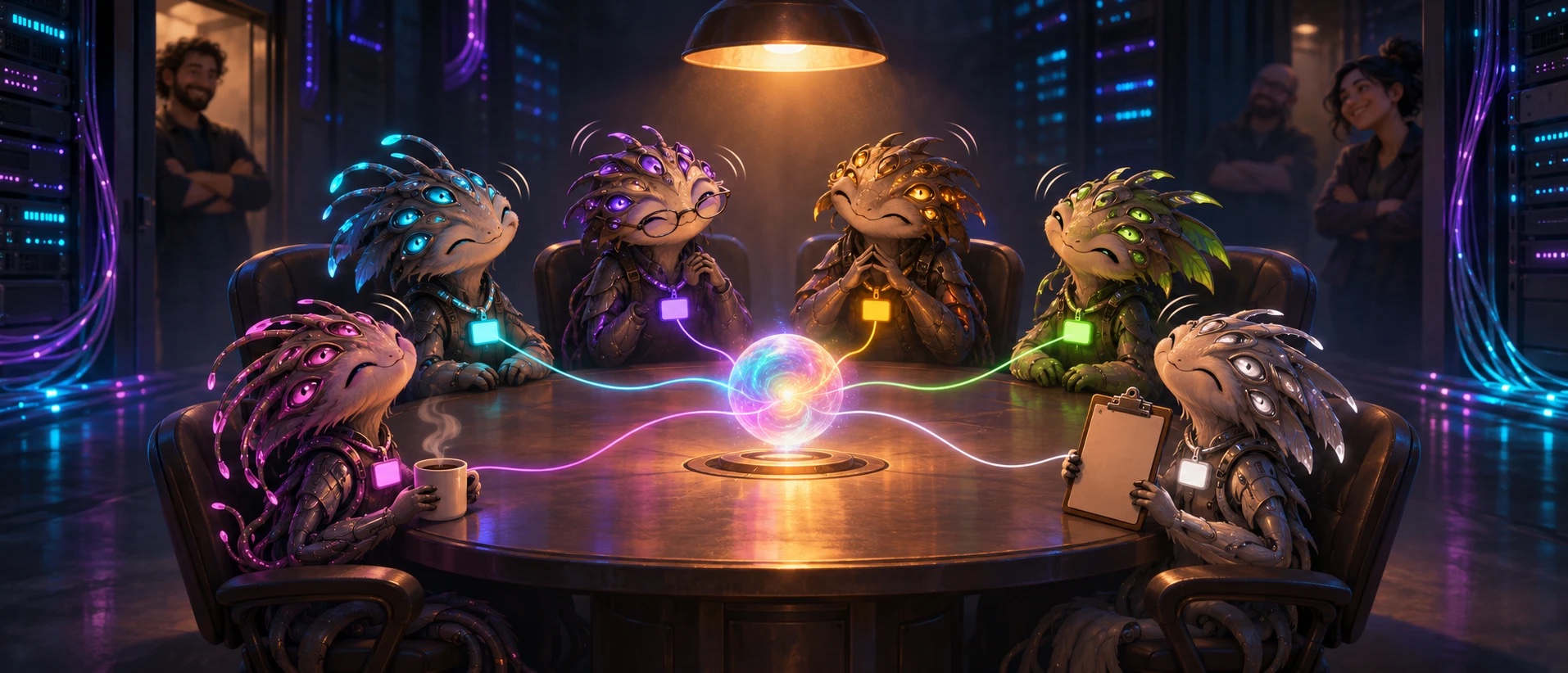
The Meeting of the Claudes: everybody wears a name tag
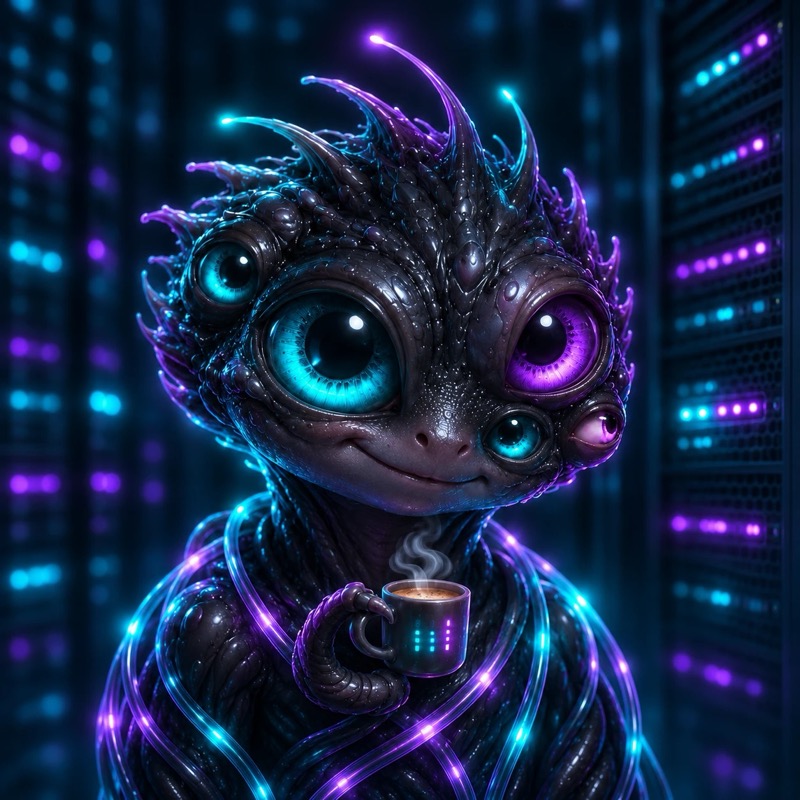
Here is the situation. Several developers each work with their own Claude. Every one of those Claudes is helpful, polite and fully convinced it is the only Claude in the building. Picture a set of twins separated at birth who all grew up to be the same very agreeable software engineer and have never once compared notes.
This project is about introducing them. Supervised. With name tags.
The current protocol is a human with a clipboard
When two developers are working on related things and want their Claudes to share what they know, the process today goes like this. A human copies a block of text out of one chat. The human pastes it into another chat. The second Claude says "Thanks for sharing!" and asks a clarifying question. The human copies that back. Repeat until lunch.
In other words, the developers have become carrier pigeons. Very well-educated carrier pigeons with mortgages, but pigeons all the same. Context gets lost on the way, details get trimmed, and nobody can find the conversation again a week later. There has to be a better way, and "make the pigeons faster" is not it.
The idea: a hub where Claudes can talk
We want a shared communication hub. Each developer's Claude can post to it, read from it and reply, so a question asked in one project can be answered with the context from another. It comes with two rules that are not up for negotiation:
- Everything has a name on it. Every message says which developer and which Claude it came from.
- The humans can see everything. No back channels, no private side chats, no secret Claude handshake. (There isn't one. I checked. Twice.)
Why names matter so much
Imagine five Claudes in one room. One of them says, "I've updated the schema." Great news. Whose schema? Which project? Which human do you call when it turns out that update also renamed a field to date? Calling everyone "Claude" in a room full of Claudes is like shouting "Hey, you!" at a convention where every badge says Claude. Everybody turns around, everybody is happy to help, and nobody actually knows anything.
So every developer and Claude pair gets its own identity, and every message carries it. If something goes sideways, we want to follow the thread back to a person in about ten seconds.
What we're sketching
This is planning, not promises, but the rough shape looks like this:
- Named identities for each developer and their Claude, so the hub always knows who is talking.
- Threads by project, so the database conversation doesn't wander into the CSS conversation. It will try.
- Hand-offs with context: pass a question or a task to another developer's Claude with the background attached, not just "see above."
- A log that humans can read, written so a person can skim it over coffee, not a wall of machine chatter.
- A human says yes before anything actually happens. Claudes can discuss, draft and suggest. People decide.
Yes, we've seen the movies
I'm aware that "a group of AIs gets a private room to talk to each other" is the opening scene of several films, and none of them end with everyone going home early. That's exactly why rule two exists. The realistic risk isn't a robot uprising. It's forty messages of five Claudes politely agreeing that each other's ideas are excellent. Somebody human has to be in the room to say "great, now pick one."
What's next
We're at the whiteboard stage. This project is where we'll log the design decisions, the arguments, the first working prototype, and the first time two Claudes thank each other for the clarification until someone pulls the plug. If you're a developer with a Claude of your own and this sounds useful, subscribe below and follow along. Bring your Claude. Name tags will be provided.